Quick Answer: Whether it's a claim after a storm or an inspection for a new policy or renewal, insurers and adjusters want to see the same basics: wide shots that show the whole roof and every slope, close-ups of any damage, the edges (gutters, flashing, vents, skylights), and the area around the house where debris landed. The California Department of Insurance and FEMA both say to photograph and video the damage before you clean up or make permanent repairs. A drone gets the overhead and slope-by-slope views you can't get from a ladder or the yard. My $150 drone roof inspection covers 10 photos and 5 videos and takes about 30 minutes on site.
I'm Tyler with Dragon Media. I'm an FAA Part 107 licensed drone pilot based in Thousand Oaks, I've been flying commercially since 2019, and a lot of my roof flights end up in front of an insurance adjuster. Homeowners usually ask me the same thing: "What pictures do they actually want?" Here's the practical answer.
This guide is for:
Homeowners filing a roof claim after Santa Ana winds or a winter storm
Homeowners whose insurer asked for current roof photos for a new policy or renewal
Buyers and sellers who want a dated roof record during escrow
Property managers keeping a yearly photo record of their buildings
The roof photos insurance companies want to see
Every insurer has its own process, and your adjuster has the final say on what they need. But the shot list below covers what claim guides from the state and FEMA ask for, and it's what I shoot on every roof.
| Shot | Why the adjuster wants it | Phone from the ground vs. drone |
|---|---|---|
| Wide overhead of the whole roof | Shows the full roof at once, so every close-up has context | Not possible from the ground. A drone gets it in one frame. |
| Each slope, one at a time | Shows which sides took damage and which didn't | You see one or two slopes from the yard. A drone covers all of them. |
| Close-ups of damage | Missing, cracked, lifted or slipped tiles and shingles, up close | A ladder gets some of it, with risk. A drone zooms in from a safe distance. |
| Ridges, valleys and edges | Shows where slopes meet and the roof perimeter, which are hard to judge from below | Hard to see from below. Easy from above. |
| Flashing, vents, chimneys, skylights | Common spots for leaks and storm damage | Usually hidden from the ground. |
| Gutters and downspouts | Bent, pulled-away or debris-filled gutters show up clearly from above | Partly visible from the ground. A drone shows the full run. |
| Debris on the roof and in the yard | Fallen branches and pieces of tile help tell the story of what happened | Yard debris, yes. Roof debris, no. |
| Interior signs (ceiling stains, drips) | Connects the roof damage to damage inside | Your phone. A drone can't help inside. |
| Temporary fixes, like tarps | Shows you protected the home from more damage | A quick drone pass shows the whole tarp job. |
Here are examples from past roof shoots I've flown, starting with the wide overhead. This is the shot that gives every close-up its context.
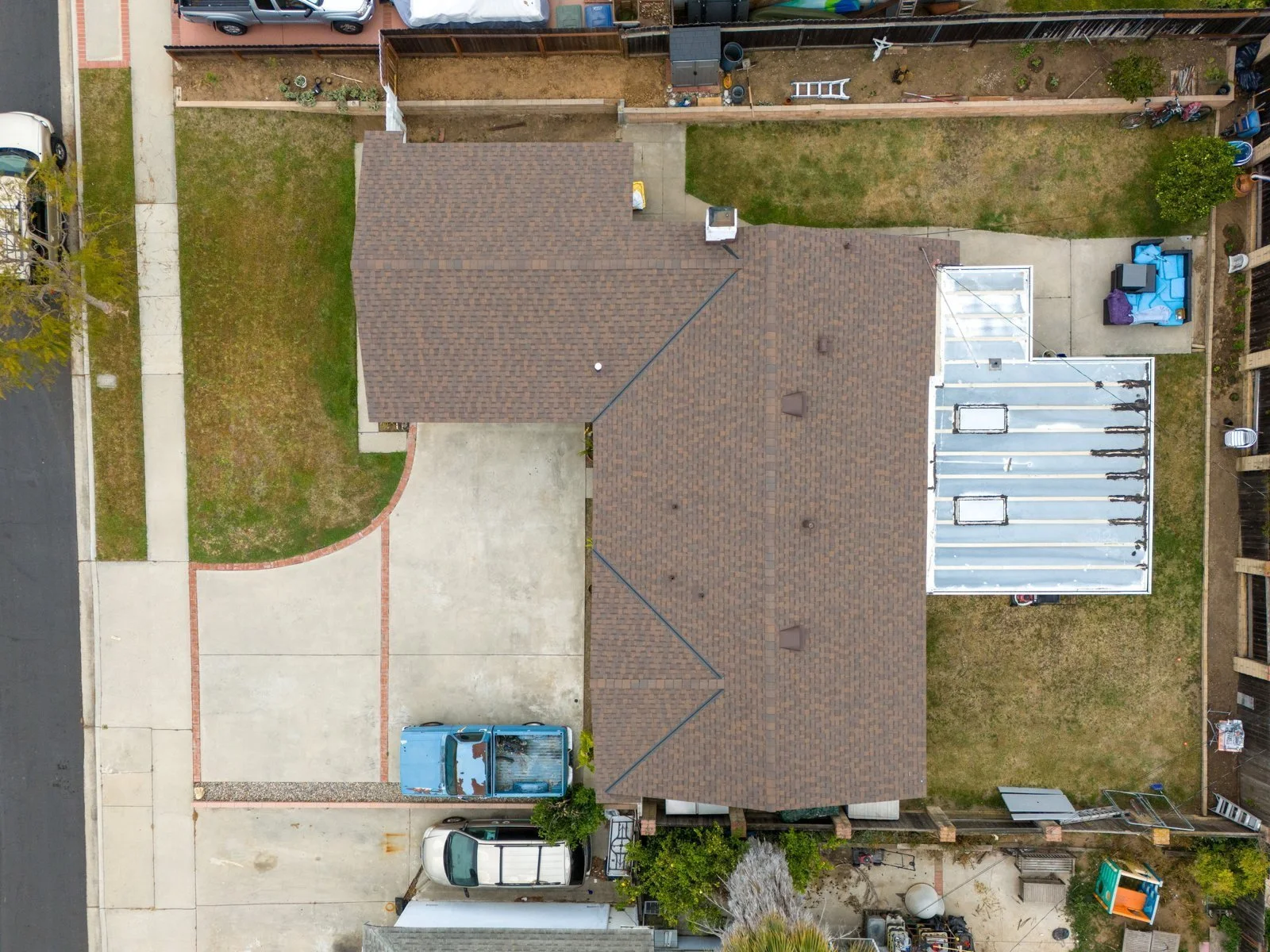
Example from a past Camarillo roof shoot of mine: a wide overhead of the whole shingle roof, every slope, and the yard around the house.
Next I fly each slope and the ridges where they meet, so the adjuster can see which sides of the roof are in play.
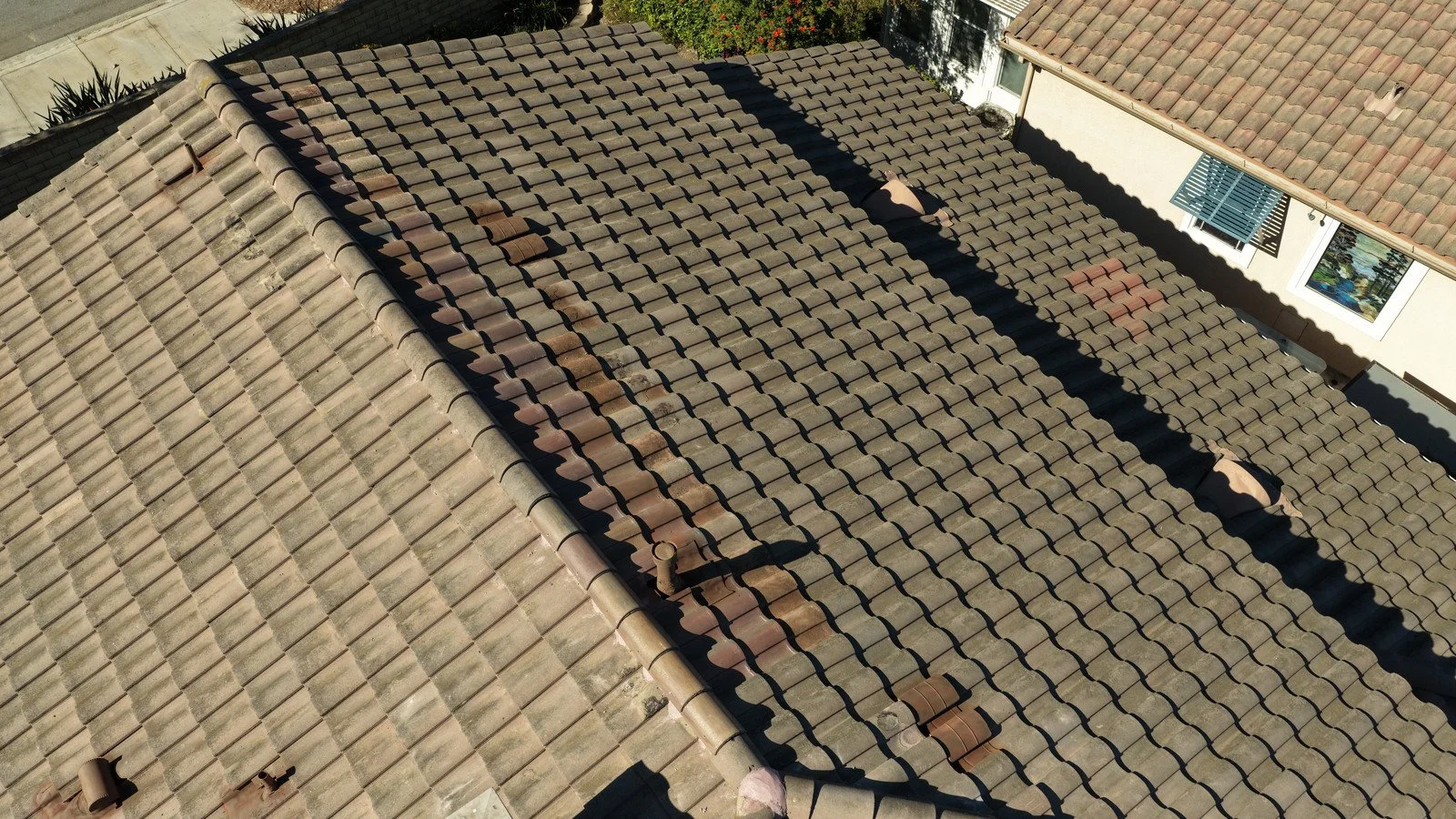
Example from a past Camarillo roof shoot of mine: two tile slopes and the ridge where they meet, plus vents, in one frame.
Planning tip: Shoot before you clean up or fix anything permanently. The California Department of Insurance says to make temporary repairs to stop more damage, like covering a hole with plastic sheeting or plywood, and to save your receipts. It also says not to make extensive permanent repairs until the adjuster has been out. Photos first, then the tarp, then more photos of the tarp.
Claim photos vs. inspection photos: what's different
People use "insurance roof photos" for two different jobs. The shots overlap, but the goal isn't the same.
| Option | Best suited for | Common uses |
|---|---|---|
| Claim photos (after damage) | Homeowners who just had wind, storm or tree damage | Showing what was damaged and where, the debris, and any temporary fixes, before permanent repairs |
| Condition photos (new policy or renewal) | Homeowners whose insurer asked for current photos of the roof | Showing the whole roof's current condition, all slopes, edges and anything on the roof like solar |
| Baseline photos (no damage yet) | Anyone who wants a "before" record ahead of storm season | A dated set to compare against if something happens later |
| Escrow photos | Buyers, sellers and agents | A clear roof record during a sale, alongside the inspections the deal calls for |
Condition and renewal photos also need the edges and anything on the roof, like solar panels, which a drone can show in one overhead pass.
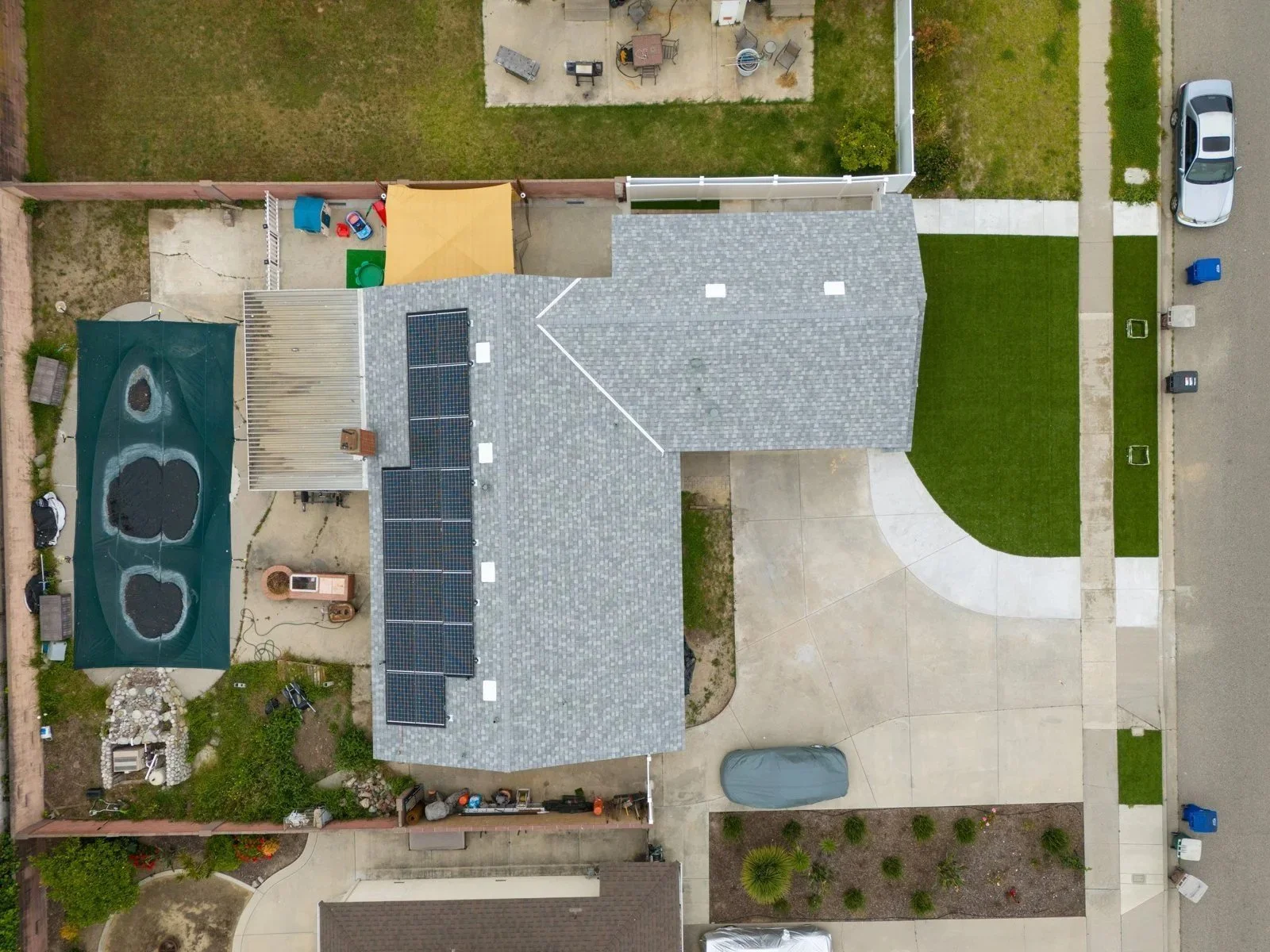
Example from a past Ventura County roof shoot of mine: an overhead of the whole roof, including solar panels, ridges, and the edges.
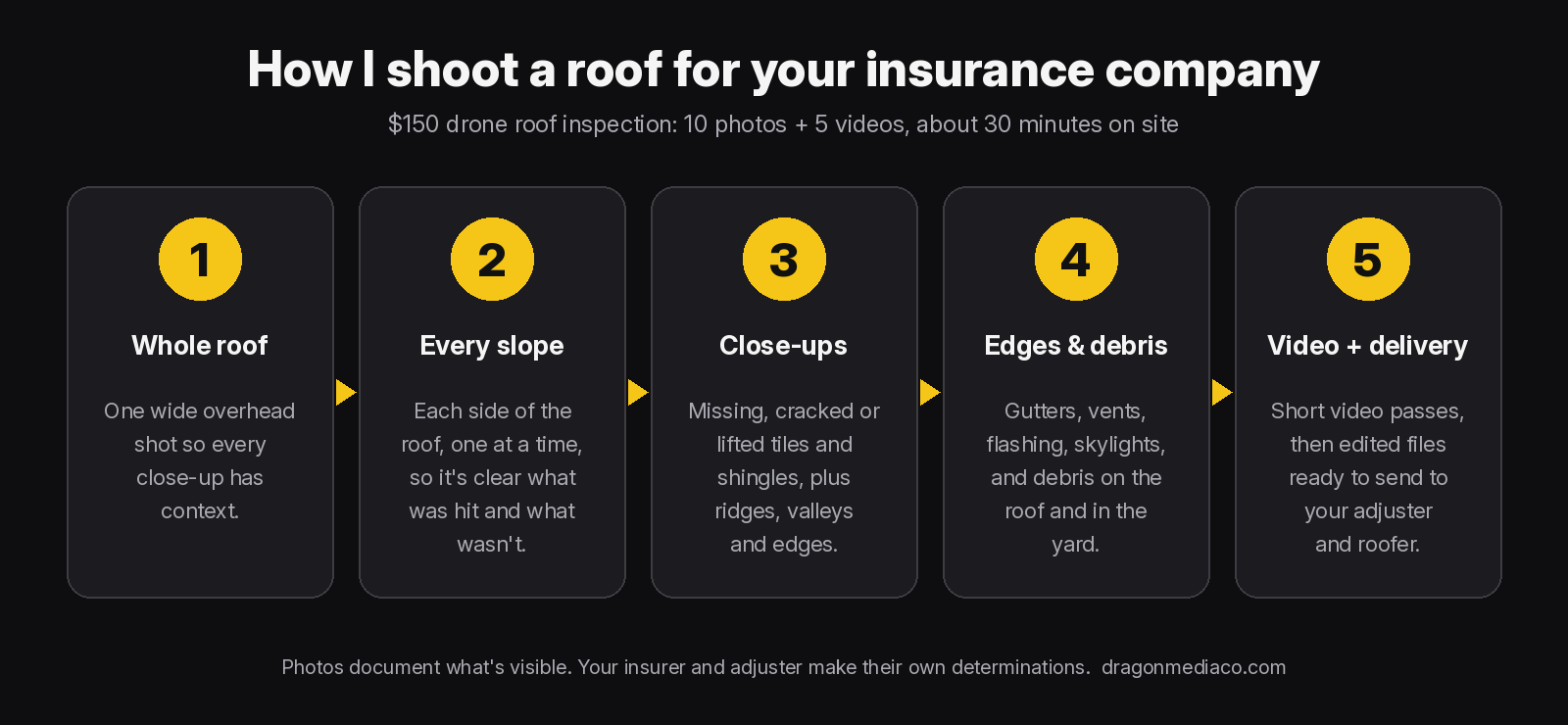
How I shoot a roof for insurance, step by step
A $150 roof inspection takes about 30 minutes on site. You don't need to be home, and no one walks on your roof. Here's the order I fly it in.
Close in, I photograph the spots that often leak first: flashing, vents and chimneys.
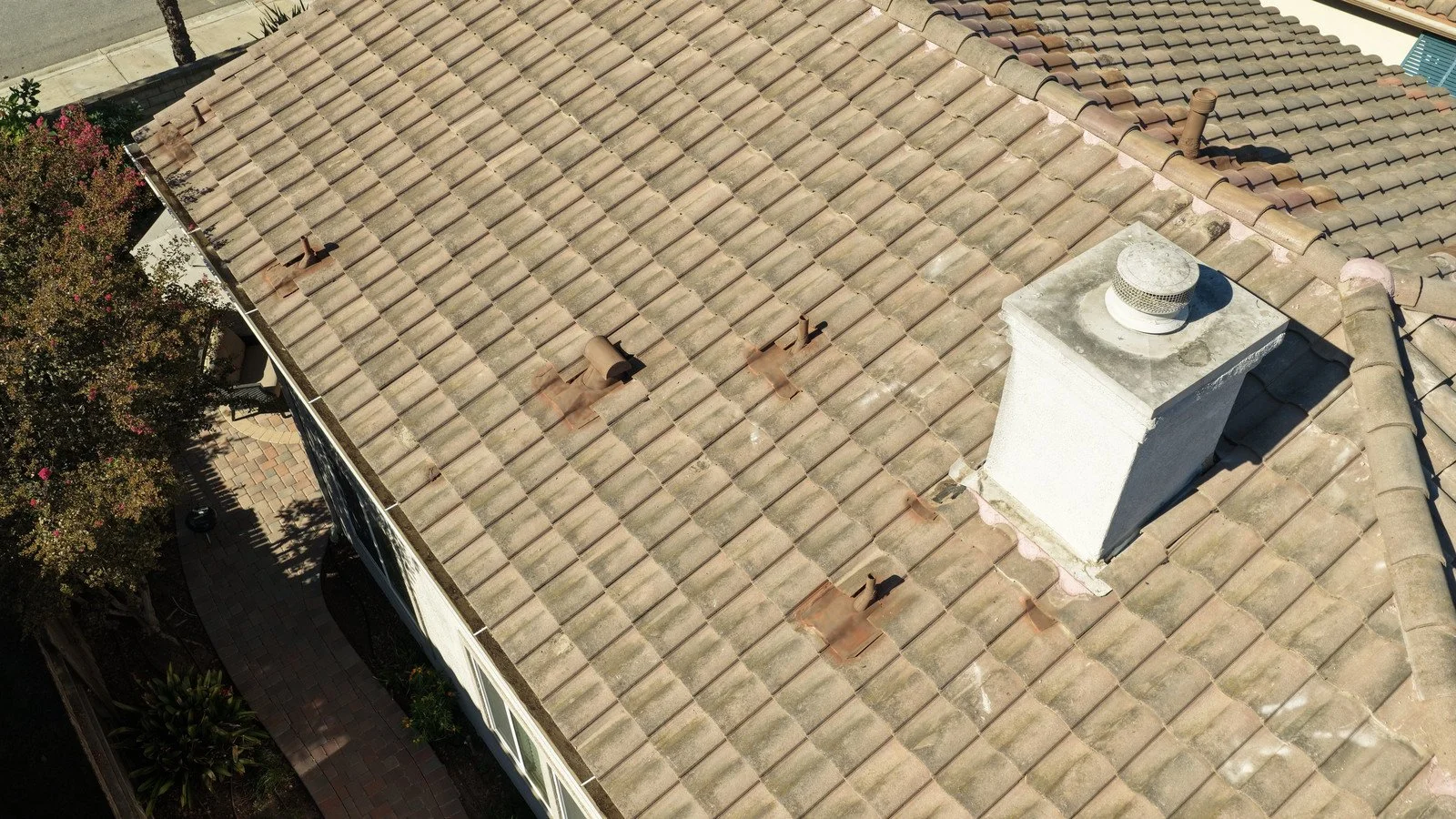
Example from a past Camarillo roof shoot of mine: a close look at pipe vents, the chimney and flashing, and the gutter along the eave.
I also take tight shots of the tile or shingle surface, and the full gutter run, so the adjuster can see condition up close.
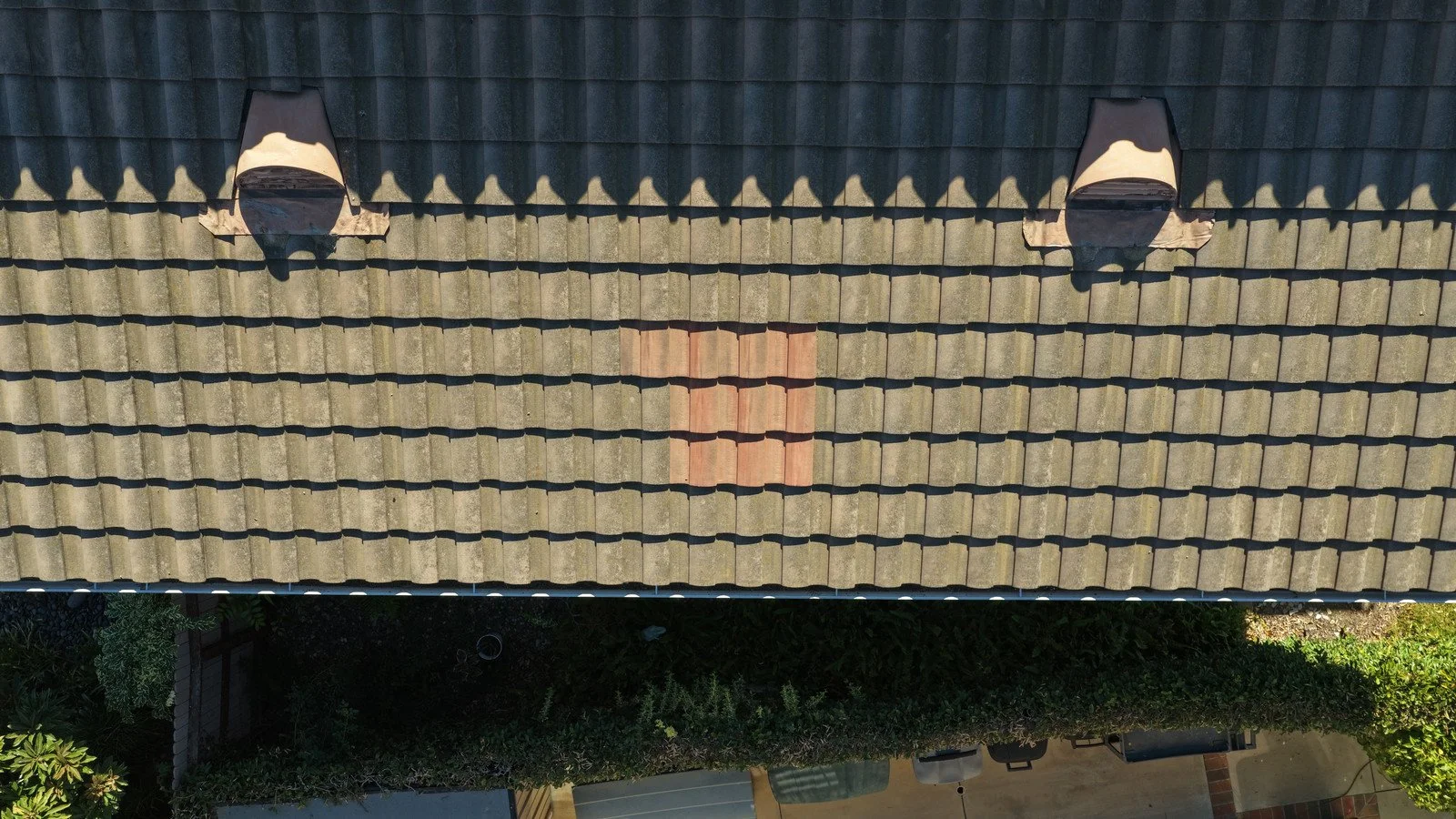
Example from a past Camarillo roof shoot of mine: a close-up of the tiles, including a patched area of newer tiles, two vents, and the gutter line.
Before-you-call checklist
Run through this before you call your insurance company or book a flight. It's built from the California Department of Insurance claims guide and FEMA's claim tips.
Safety first. Don't climb onto a damaged or wet roof to take pictures.
Take photos and video before cleanup and before any permanent repairs.
Get wide shots and close-ups. Wide shots show where the damage is. Close-ups show what it is.
Photograph inside too. Ceiling stains, drips and wet insulation connect the roof to the interior damage.
Make temporary repairs (tarp, plastic sheeting, plywood) and keep every receipt.
Don't throw out damaged items until the adjuster says you can.
Write down the date, time and cause of the damage, like "wind on the night of the 12th."
Keep a log of every call with your insurer: names, dates and what was said.
Get written, line-by-line bids from licensed contractors.
Keep copies of every photo and video you send.
What drone photos can't do
I'd rather be upfront about this. My photos and video show the visible surface of your roof. They're not a roofing diagnosis, a written condition report or a certified inspection, and I can't promise how any claim turns out. Your insurer and adjuster make their own call. What the photos do is give your adjuster and your roofer the same clear, dated look at the roof, without anyone having to climb up there first. For more on where a drone fits next to a hands-on check, read drone roof inspection vs. manual inspection.
Why hire a licensed, insured pilot for this
A paid roof flight is commercial work, so it falls under the FAA's Part 107 rules. I'm Part 107 licensed, and Dragon Media carries $1M aggregate general liability including drone operations, plus $1M professional/media liability. I fly a 6K video / 100MP photo drone, which is what lets me zoom in on a cracked tile without getting close to the roof.
Pricing is simple:
| Service | Price | What you get |
|---|---|---|
| Drone roof inspection (home) | $150 | 10 aerial photos and 5 aerial videos of one home's roof, about 30 minutes on site |
| Hourly drone work | $150 first hour, $100 each additional hour | Bigger properties, multiple buildings, or more coverage than the roof package |
Prepayment confirms your appointment, and most drone inspection projects are delivered within 24 to 48 hours. If wind, rain or airspace makes a flight unsafe, I reschedule rather than cut corners.
I'm based in Thousand Oaks and fly across Ventura County, including Westlake Village, Newbury Park, Camarillo (Mission Oaks and Spanish Hills), Oxnard and Ventura. See my Thousand Oaks drone roof inspection page, my drone services in Thousand Oaks, and drone inspection services in Ventura County. If wind is what brought you here, read drone roof inspection after the Santa Ana winds, or see exactly what's in the $150 roof inspection package.
The bottom line
Insurance companies want to see the whole roof, every slope, the damage up close, and the edges where wind and water get in, all before anything gets fixed for good. A drone gets those shots in about 30 minutes, without anyone on the roof.
Sources (checked November 2026): California Department of Insurance, Residential Property Claims Guide; California Department of Insurance, Don't Get Scammed After a Disaster; FEMA, What information do I need to file a home insurance claim?; FAA, Certificated Remote Pilots including Commercial Operators. This is a practical guide, not insurance or legal advice.